
1. The Beginning — How It All Started (DMart case study)
When you walk into a DMart store, it might just feel like another supermarket — but behind those aisles is an incredible story of patience, smart thinking, and rock-solid execution.
The Radhakishan Damani story, He didn’t start as a businessman in retail. In fact, he was one of India’s most successful stock market investors before he decided to step into retail around the year 2000.
He had observed global giants like Walmart and Costco and realized one thing — in a country like India, where people love discounts and value for money, a well-managed supermarket could change the game. That’s how DMart was born — with one small store in Powai, Mumbai, and a big dream to make everyday essentials affordable for everyone
2. The Idea — Why DMart Worked
Damani didn’t try to be fancy or flashy. His plan was simple:
“Sell good quality products at the lowest possible price, every single day.”
Here’s what made DMart business model click:
- Everyday Low Pricing: Instead of offering big festival discounts, DMart keeps prices low all year round.
- Own Your Stores: Instead of renting, DMart buys most of its properties, saving huge costs in the long run.
- Limited Products, Fast Turnover: They don’t try to sell everything under the sun — just the essentials people buy regularly.
- No Unnecessary Expenses: No expensive advertising, no extra frills — just pure value.
This practical approach made DMart not only popular with middle-class families but also one of the most profitable retail chains in India.
3. The Challenges — And How They Were Overcome
When DMart started, India’s retail market was dominated by small kirana stores. Competing with them wasn’t easy.
Damani faced tough challenges like:
- Finding good store locations at affordable rates.
- Building customer trust when big players were already entering retail.
- Managing inventory efficiently to avoid losses.
But Damani’s patience paid off. Instead of expanding too fast, he grew DMart slowly and steadily, focusing on profitability first and growth later. This cautious, calculated approach helped the company stay debt-free and profitable from early on.
5. The People Behind DMart — Management That Matters
While Radhakishan Damani remains the guiding force, DMart’s day-to-day operations are handled by Ignatius Navil Noronha, the CEO — one of the longest-serving and most respected retail professionals in India.
Under his leadership, DMart has grown steadily while staying true to its values:
- Keeping customers first.
- Avoiding unnecessary debt.
- Focusing on operational excellence instead of hype.
4. Growth & Profitability — Year After Year (Avenue Supermarts financial performance)
If you take a look at Avenue Supermarts Income Statement from 2014 to 2025, you’ll spot one clear trend — consistent and sustainable growth. The company has managed to increase its numbers every year, focusing not just on opening more stores, but on making every store profitable.
That’s the beauty of DMart’s story. It shows that sometimes, slow and steady really does win the race. Companies that grow with discipline and a long-term mindset often turn out to be the best investments.
- 🔍 My Simple Analysis Method
- I like to study a company’s Balance Sheet and Profit & Loss Statement using a percentage change format.
Why? Because it instantly shows whether a company is improving year after year in: - 📈 Sales
- 💰 Operating Profit
- 🧾 Net Profit
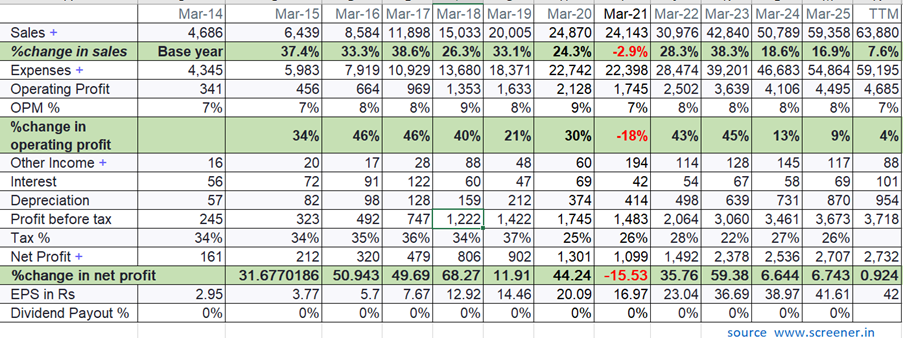
When I used this method on DMart’s financials over the last 10 years, here’s what I found:
✅ All three metrics — sales, operating profit, and net profit — have consistently grown.
😷 The only slowdown was in 2021 (COVID year), but even then, DMart maintained its sales — a strong sign of resilience and customer loyalty.
- This tells us that DMart’s business model is built to last, even during tough times.
- Sales, operating profit, and net profit — all have grown consistently.
- The only exception? 2021, when COVID hit. But even then, DMart didn’t let sales fall — they held their ground, proving how strong and resilient their model is.
This kind of analysis makes it easy to spot fundamentally strong businesses — the ones that stay profitable even when times get tough.
💡 Coming Soon on Skill N Shine
I’ll soon be sharing a detailed post on how to use the % change method to analyze companies like DMart — step by step. It’s a simple yet powerful tool to spot businesses that are genuinely strong and worth investing in for the long term.
Stay tuned — because understanding numbers the smart way can make you a smarter investor. 😉
7. Present Condition — Where DMart Stands Today
From the most recent quarter / fiscal disclosures:
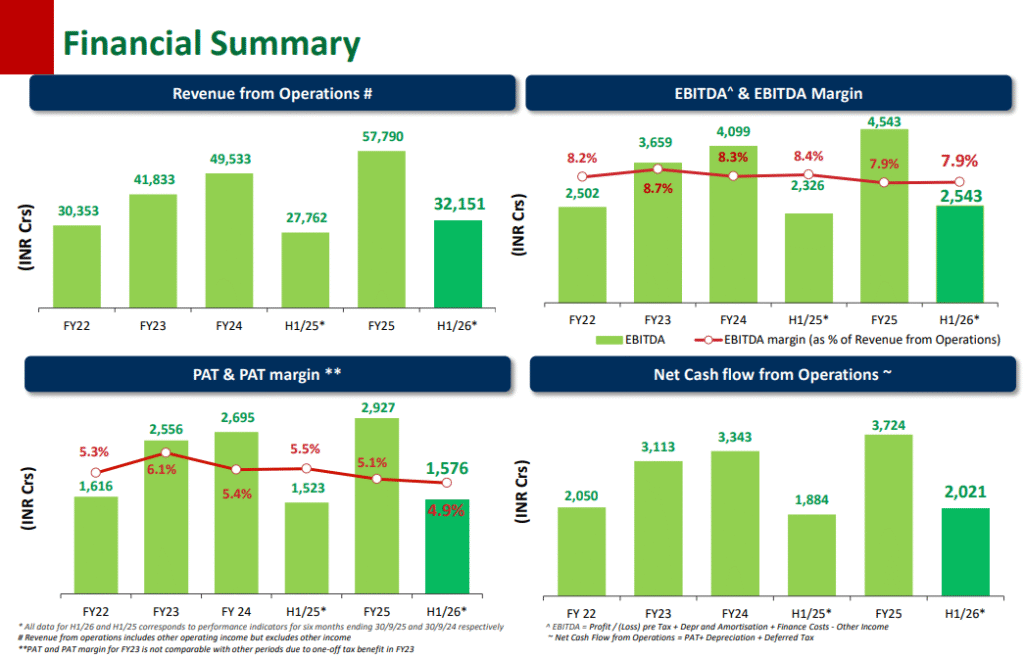
- In Q1 FY26, DMart’s revenue from operations was ~ ₹15,932 crore, up ~16.2% YoY. Bajaj Broking
- In that same quarter, EBITDA was ~ ₹1,313 crore (↑7.6% YoY), yielding an EBITDA margin of ~ 8.2%. Bajaj Broking
- For the full FY25, the company reported revenue of ~ ₹59,358 crore and net profit of ~ ₹2,708 crore (PAT). mint+2Equitymaster+2
- In FY25, EBITDA margin was ~ 7.6% (down from ~8.1% in FY24). ICICI Direct+1
- Also, according to segment analysis, operating profit (OP) jumped ~22% year-on-year for the latest period. Trendlyne.com
The operating profit (EBITDA) has also increased — now standing around ₹1,300 crore per quarter, with healthy margins of 7–8%. These are strong numbers for a retail business that works on thin margins.
Here’s the best part — DMart barely has any debt!
Their debt-to-equity ratio is close to 0.07, which means they use almost no borrowed money to run or expand their business.
In simple words — they grow using their own profits, not loans.
💵 Cash Flow — The Real Strength
Now let’s talk about cash flow, which shows how much real money a company generates.
DMart’s cash flow from operations has been rising every year — from around ₹1,600 crore a few years ago to over ₹3,000 crore now. That means the core business is bringing in more cash than ever before.
Sometimes their free cash flow (cash left after investments) looks low or even negative — but that’s only because they keep investing heavily in opening new stores and improving infrastructure. That’s actually a good sign for a growing company.
6. DMart’s Future — What’s Next?
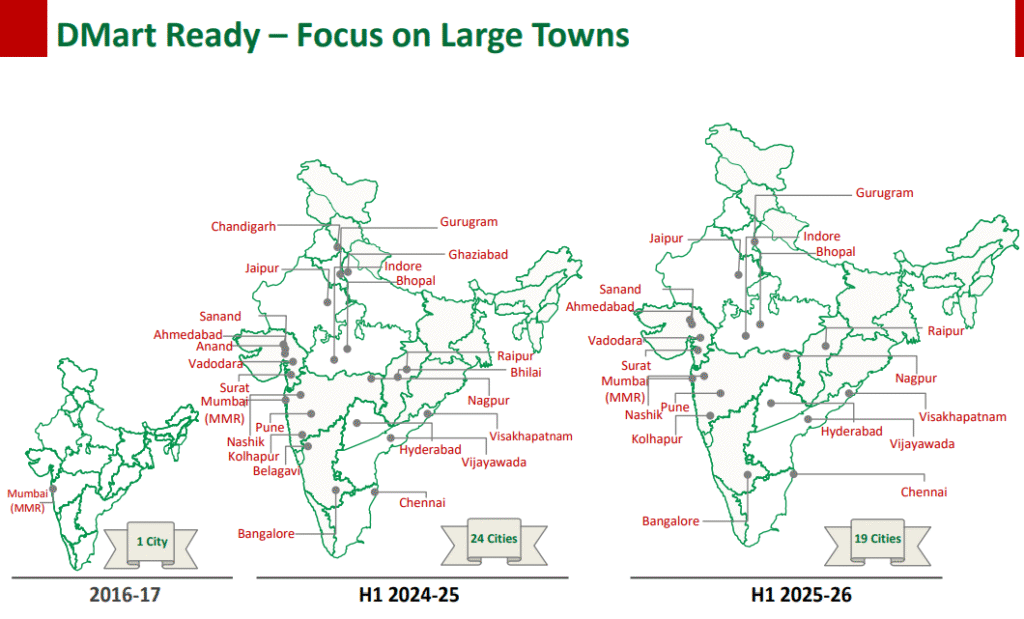
Focus
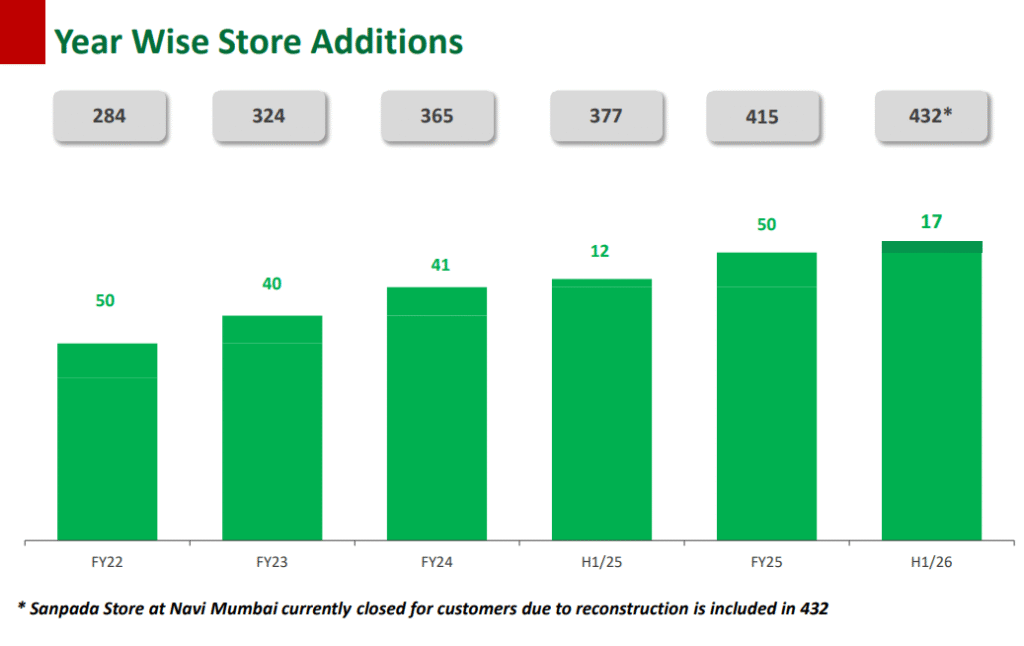
The company plans to add 40-50 stores annually with a long-term goal of increasing this number to 60-70 stores per year. [13]
8. A Quick Technical View (for Market Watchers 🧠📈)
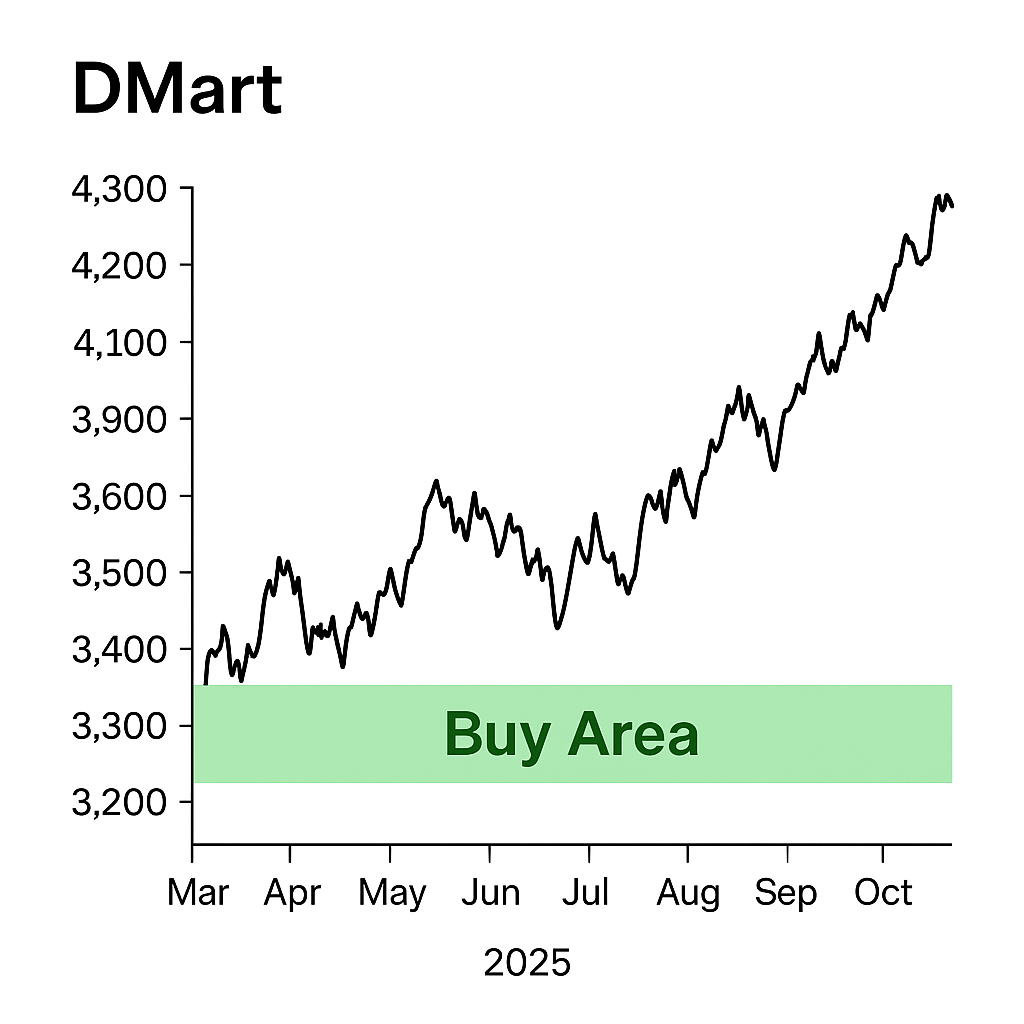
As of October 17, 2025, Avenue Supermarts (DMart) is trading around ₹4,302.50 per share. Back in March 2025, the stock was moving in the range of ₹3,300–₹3,600, which I personally consider a great buying zone for long-term investors.
If, in the future, the stock comes back to this range — or even below it — it could offer a good . DMart investment opportunity to accumulate. This level provides a margin of safety, as it has acted as a strong support zone in the past.
In short, DMart at ₹3,300–₹3,600 looks like a value zone for those who believe in the company’s steady growth story and want to invest with patience and discipline.
9. Lessons for Young Entrepreneurs 💡
DMart’s journey teaches us something priceless:
- You don’t need a brand-new idea — you just need to execute better than others.
- Patience beats hype. Damani waited years before listing DMart publicly.
- Focus on value creation, not just valuation.
In a world chasing quick success, DMart is a masterclass in slow, steady, and smart business building.
Please let me know which company I should analyze next, and I will bring the details for you. Thank you